Overview
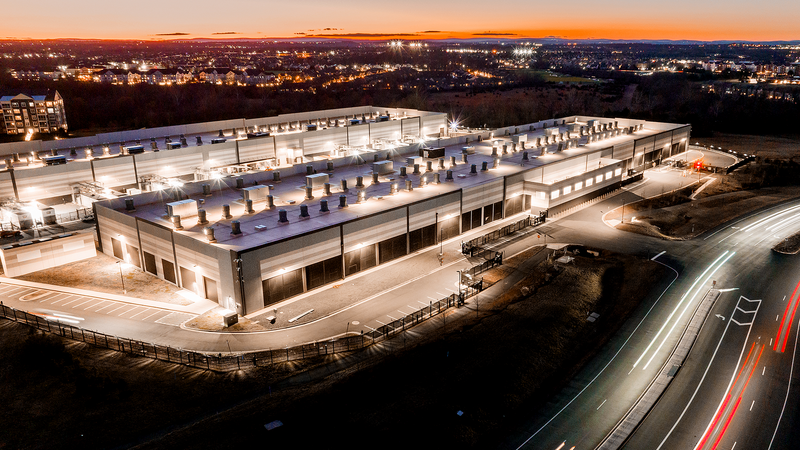
Southern Ohio covers Adams, Scioto, Lawrence, Gallia, Pike and Jackson counties in Ohio, plus parts of Highland and Meigs. Until 2025 the region held only telephone exchanges and small enterprise server rooms. It now hosts some of the largest planned data center campuses in the United States. Federal land, retired power-plant sites and a dense high-voltage grid draw them.
History
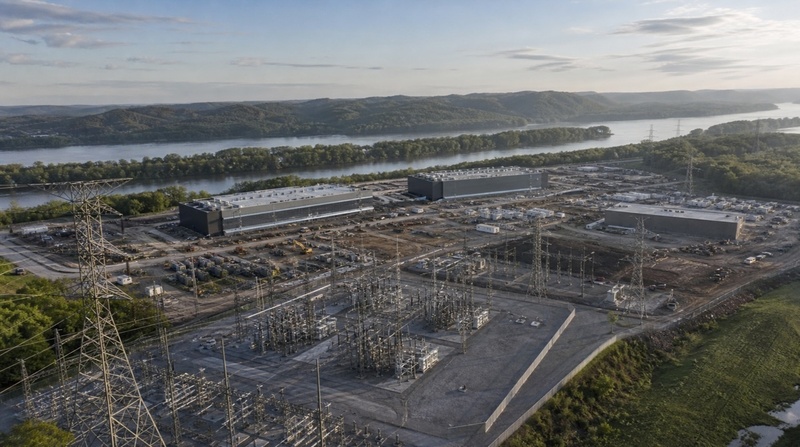
The region's energy history shapes its data center market. In 1952 a group of utilities formed the Ohio Valley Electric Corporation (OVEC) to power the new Portsmouth Gaseous Diffusion Plant near Piketon. The plant enriched uranium from 1954 until 2001, and its cleanup continues today. OVEC's Kyger Creek station at Cheshire and the coal plants of Adams County built a strong high-voltage grid along the river. Dayton Power & Light retired its J.M. Stuart and Killen stations in Adams County in 2018.
The data center wave began in 2024. Shell companies started to assemble land near Manchester, Mt. Orab and Franklin Furnace under nondisclosure agreements. In April 2025 the Department of Energy listed the Portsmouth site among 16 federal sites for possible data center development. Scioto County named Google as the developer of its Franklin Furnace project in January 2026.
In March 2026, SB Energy broke ground at the Portsmouth site, and Adams County officials said Amazon stood behind the Manchester project. In August 2026, OpenAI leased all 17 planned buildings at the Portsmouth campus. In November 2026, Amazon bought its 1,016-acre site in Adams County.
The Market Today
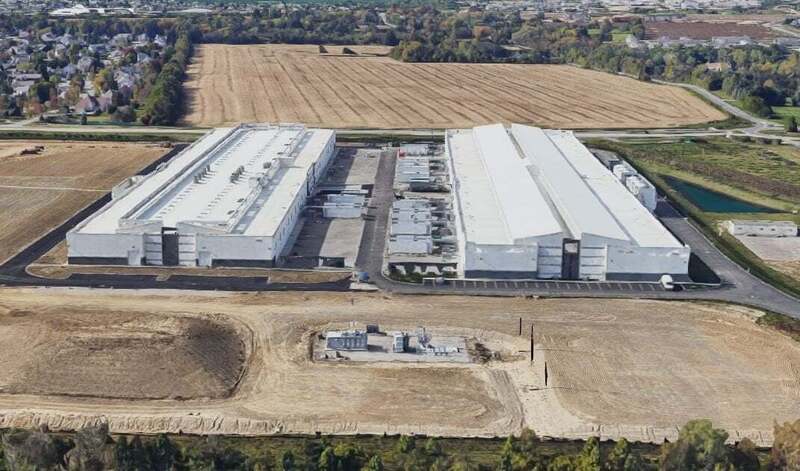
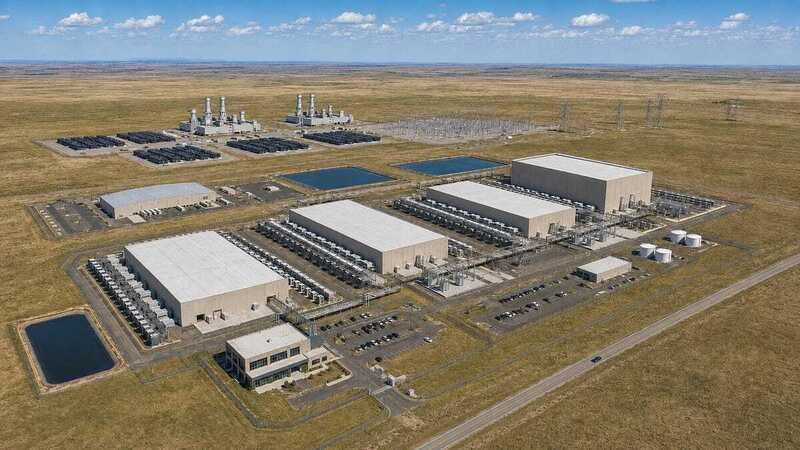
The PORTS-Pike Technology Campus near Piketon anchors the market. SB Energy, a SoftBank Group company, will build, own and operate 17 buildings for OpenAI on and beside the former enrichment plant. NVIDIA guarantees part of the rent on the first nine buildings. Site clearing for the first phase started in late 2026.
Google is developing Project Dazzler on about 792 acres at Franklin Furnace in Scioto County. The first phase has two large data halls and a new 765 kV substation. Amazon owns 1,016 acres near Manchester in Adams County and plans up to 12 buildings. Strata Expanse runs a small off-grid AI site near Ironton.
Colocation is thin. No carrier-neutral facility operates in the region. Carriers meet inside the incumbent telephone exchanges, led by the Verizon central office in Portsmouth. Verizon runs 15 exchanges across the region, most of them built by Frontier before Verizon bought it. AT&T runs the exchanges in Ironton and Gallipolis. Holzer Health System runs a hospital data center in Gallipolis.
Advantages
-
Transmission. AEP's 765 kV and 345 kV lines cross the region. New stations at Piketon and Franklin Furnace extend that backbone to the largest campuses.
-
Brownfield land. The Portsmouth plant and the retired Stuart and Killen stations offer large industrial tracts with existing substations. Owners now market the Stuart and Killen sites for data centers.
-
Water. The Ohio River supplies cooling water. Amazon plans to draw river water at its Adams County campus.
-
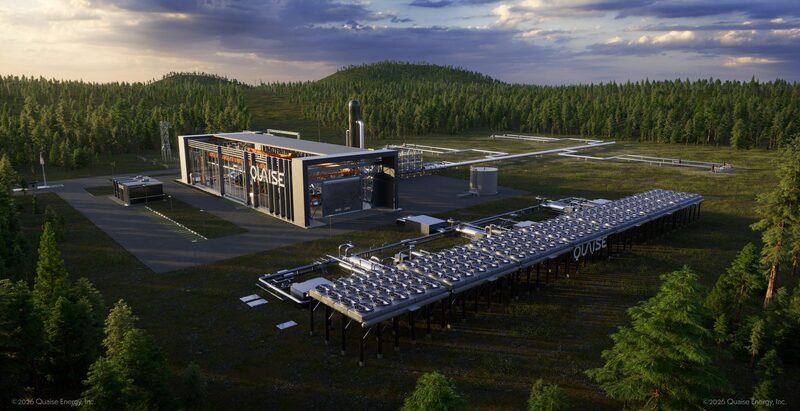
New generation. A SoftBank affiliate plans about 9.2 GW of gas generation for the Piketon campus. Oklo plans a 1.2 GW nuclear campus in Pike County, with Meta buying its power.
-
Local incentives. Counties grant long property-tax abatements in exchange for annual payments. Scioto County gave Google a 15-year, 75% abatement in January 2026.
Challenges
-
Grid build-out. The large campuses wait on new transmission. AEP's grid program for the Piketon campus costs about $5.1 billion, with first service due in late 2028.
-
Tariff terms. AEP Ohio's data center tariff makes new loads above 25 MW pay for at least 85% of contracted demand for up to 12 years.
-
Local resistance. Sprigg and Monroe townships in Adams County adopted township zoning on November 3, 2026. Ironton, South Point and Jackson each passed data center moratoria in 2026.
-
State incentives. Ohio paused new data center sales-tax exemption agreements in June 2026.
-
Environmental permits. The Portsmouth site carries legacy contamination and federal cleanup limits. Wetland and stream reviews slowed permits at Portsmouth and Franklin Furnace.
Trends
-
Gigawatt campuses. Federal land and retired power-plant sites now host projects measured in gigawatts.
-
Bring-your-own power. Developers pair campuses with dedicated generation: gas plants at Piketon, an off-grid site near Ironton and a nuclear campus in Pike County.
-
Hyperscalers behind shell companies. Google, Amazon and other buyers assembled land through LLCs under nondisclosure agreements. Anger over the secrecy has fueled zoning and moratorium votes.
-
Copper retirement. Verizon plans to retire copper phone service in its Ohio exchanges from December 2026. The buildings stay in service as fiber nodes.
-
A growing corridor. Projects at Mt. Orab in Brown County and Chillicothe in Ross County link the region to the Cincinnati and Columbus markets.
Power and Policy
Southern Ohio sits in PJM Interconnection, the regional grid operator. AEP Ohio serves most of the region, and AES Ohio serves the Stuart area in Adams County. The Public Utilities Commission of Ohio (PUCO) sets rates, and the Ohio Power Siting Board (OPSB) approves large generation and transmission. PUCO approved AEP Ohio's data center tariff in July 2025, and AES Ohio's tariff is pending in its rate case. Ohio House Bill 15 (2025) ended ratepayer support for OVEC's coal plants and eased behind-the-meter generation.