Overview
The Lubbock region covers the South Plains of West Texas, from Muleshoe and Plainview south to Lamesa, Seminole and Gail, and east to Spur. Lubbock, the largest city on the South Plains, holds a small set of telecom and colocation sites. Most of the growth sits in rural counties, where AI and hyperscale campuses rise beside high-voltage substations. Bitcoin mining, oil-field gas and wind power shaped where those campuses landed.
History
Lubbock's first data centers were telephone and network buildings. Southwestern Bell opened its main downtown central office in 1961, and MCI built a network site on Avenue A in 1990. Williams Communications added a network point of presence in 2000, now Lumen Lubbock 1. After Reese Air Force Base closed in 1997, the city turned it into the Reese Technology Center. A small carrier-neutral colocation facility was running there by 2010, and Texas Tech University runs research computing on the former base.
The power map changed next. Lubbock Power & Light moved most of its load from the Southwest Power Pool to ERCOT in 2021 and finished the move in December 2023. Meanwhile, Argo Blockchain opened its Helios bitcoin mine near Afton in Dickens County in 2022. Galaxy Digital bought Helios that December. In March 2025, CoreWeave signed a 15-year lease to turn it into an AI campus.
Wholesale and hyperscale developers followed in 2026. Aligned Data Centers broke ground on its Project Caprock campus near Abernathy in April. Amazon bought about 485 acres near Floydada that June and began building four data halls.
The Market Today
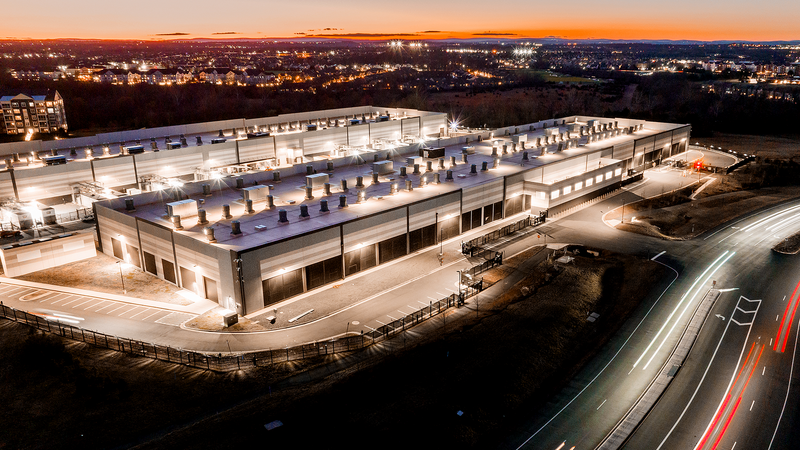
Galaxy's Helios campus leads the market. Its first CoreWeave data halls entered service in 2026, and two more buildings are under construction for 2027. A fourth CoreWeave building follows in 2028. Galaxy is marketing further approved capacity to hyperscale tenants.
Near Abernathy, Aligned is building the first of six buildings at Project Caprock, with GPU cloud provider Lambda as its occupant. Amazon's Horizon Junction campus near Floydada is due to finish its first data halls in 2027. In Borden County, SB Energy is preparing land west of Gail for a campus beside its Juno solar farm.
Lubbock itself holds smaller sites. AT&T, Verizon and Verizon Wireless run telephone exchanges and switching centers across the city, alongside Lumen's colocation room and the Reese facility. Duos Edge AI opened a modular edge data center in central Lubbock in 2026. CORVA Infrastructure Services plans a carrier-neutral data center beside a Lubbock Power & Light substation on the city's northeast side. The region has no carrier hotel or public internet exchange.
Toward the Permian Basin, projects tap oil-field gas. NYDIG runs a small bitcoin mine on flare gas near Klondike. Energy Arc plans a gas-powered campus near Seminole.
Advantages
-
Two grids. Lubbock Power & Light and the rural cooperatives connect to ERCOT. Xcel Energy serves many surrounding towns on the Southwest Power Pool (SPP), so developers can choose the market that fits their plan.
-
Transmission. Competitive Renewable Energy Zone (CREZ) lines and Xcel's 345 kV network cross the region. The new campuses sit beside large 345 kV substations.
-
Land. Farm and ranch parcels of several hundred acres trade at low cost. Amazon's Floydada site covers about 485 acres, and Project Caprock covers 313 acres.
-
Wind, solar and gas. Wind and solar farms feed the same substations. Permian Basin gas fields in the south supply on-site generation.
-
Talent and research. Texas Tech University trains engineers and runs high-performance computing at the former Reese base.
-
Local incentives. Dickens and Borden counties granted tax abatements to data center campuses. Floyd County held hearings on an abatement for Amazon.
Challenges
-
Grid upgrades. New campuses depend on new 345 kV connections and large-load studies. Senate Bill 6 requires loads of 75 MW or more to post study security and accept curtailment in emergencies.
-
Local pushback. Residents opposed large data center proposals in Lubbock in 2026. In September, the City Council voted to start a 90-day pause on large data centers while it writes rules.
-
Water. The region draws its water from the Ogallala Aquifer, which also supplies its farms and towns. New campuses favor air cooling or closed-loop liquid cooling to limit water use.
-
State permits. In September 2026, Texas paused new air permits for data center generators while the state reviews them.
-
Severe weather. Hail, high winds, dust storms and tornadoes strike the South Plains each spring. Summer heat raises cooling loads.
-
Distance. Lubbock sits about 300 miles from Dallas. The region suits AI training better than services that need low latency to large cities.
Trends
-
Miners turn to AI. Helios moved from bitcoin mining to AI computing for CoreWeave on the same grid connection.
-
Hyperscale arrives. Amazon and Aligned are bringing large, purpose-built campuses to rural South Plains counties.
-
Bring your own power. Projects in the south plan on-site gas generation, and flare-gas mining runs on oil leases.
-
Edge and interconnection. Edge modules and planned carrier-neutral sites in Lubbock aim to link rural AI campuses with users in cities.
Power and Policy
The Electric Reliability Council of Texas (ERCOT) runs most of the region's grid, and the Public Utility Commission of Texas (PUCT) regulates it. Lubbock Power & Light, the city's municipal utility, has been fully in ERCOT since December 2023. AEP Texas, South Plains Electric Cooperative, Lighthouse Electric Cooperative and Lyntegar Electric Cooperative serve the rural areas. Xcel Energy's Southwestern Public Service operates in the Southwest Power Pool and filed a large-load tariff in 2026. Senate Bill 6, signed in June 2025, sets rules for loads of 75 MW or more. Counties grant tax abatements under Chapter 312 of the Texas Tax Code.